
“We don’t hear white people talking about how slavery has negatively affected them,” says Nancy Wong, a Baha'i living in Chicago. She shared that although she has many white friends who know that they’re ancestors were enslavers, none of them acknowledge that their feeling of entitlement is a direct result of slavery. In this short clip from the “Race Unity Project,” Nancy discusses how important it is for white people to address their legacy of privilege. “In order to heal, people of European descent in this country will have to address their illnesses in a way that is not shameful,” she says. Watch as Nancy shares how shame often hinders white people from talking about racism and being committed to abolishing it.

Louis Venters shares a story of how Abdu’l-Baha exemplified his commitment to race unity and universal brotherhood in his personal life and instructed others to do the same.

In this video clip from “The Race Unity Project,” Sue St. Clair shares what it was like, given her experiences with #racism, to see a display of interracial love and friendship for the first time. This happened during a visit to the #Bahai House of Worship for North America, located on the shores of Lake Michigan just north of Chicago in Wilmette, Illinois.
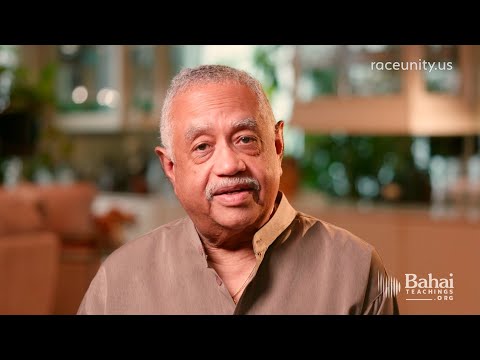
Baha’is in the US have for a century worked to end racism and promote race unity. The Race Unity Project is an oral history of this story; it was started by Maziar Bahari, who isn't a Baha'i. The project looks at successes and challenges Baha'is face – and what they're doing now to address this vital issue.

A story of how a youth service project in Lewiston, Maine, brought together immigrants from various African countries who overcame cultural differences to serve their community.

Learn about children’s and youth programs around the United States. Contribute to public discourse on topics of race and diversity, and take direct social action in collaboration with like-minded groups and individuals.

Learn about the tenets of the Baha'i Faith, emphasizing the essential unity of the human race and humanity's progression towards a state of maturity.

(Part 5 of a 5 part series) The Minneapolis Bahá’í Center is a block away from the spot where George Floyd was killed in May 2020. When surrounding streets were shut down for weeks due to protests, the center set up an improvised food pantry.

(Part 4 of a 5 part series) The Minneapolis Bahá’í Center is a block away from the spot where George Floyd was killed in May 2020. When surrounding streets were shut down for weeks due to protests, the center set up an improvised food pantry.

(Part 3 of a 5 part series) The Minneapolis Bahá’í Center is a block away from the spot where George Floyd was killed in May 2020. When surrounding streets were shut down for weeks due to protests, the center set up an improvised food pantry. Since then, Baha’is have been strengthening connections with the local community through shared acts of service.

(Part 2 of a 5 part series) The Minneapolis Bahá’í Center is a block away from the spot where George Floyd was killed in May 2020. When surrounding streets were shut down for weeks due to protests, the center set up an improvised food pantry. Since then, Baha’is have been strengthening connections with the local community through shared acts of service.

This 5 part series is included in "A Rich Tapestry", a video storytelling collection that expresses and illustrates how love is being translated into action to address questions of race and culture in the United States.

Discover how the Baháʼí Faith views the world's major religions as parts of a single, unfolding divine revelation, brought by messengers like Abraham, Moses, Jesus, and Muhammad, with Baha'u'llah as the most recent. The video highlights the faith's core vision for global unity, emphasizing shared beliefs such as the oneness of God and humanity, and the harmony between faith and reason, all within a community dedicated to serving humanity and fostering hope for the future.
